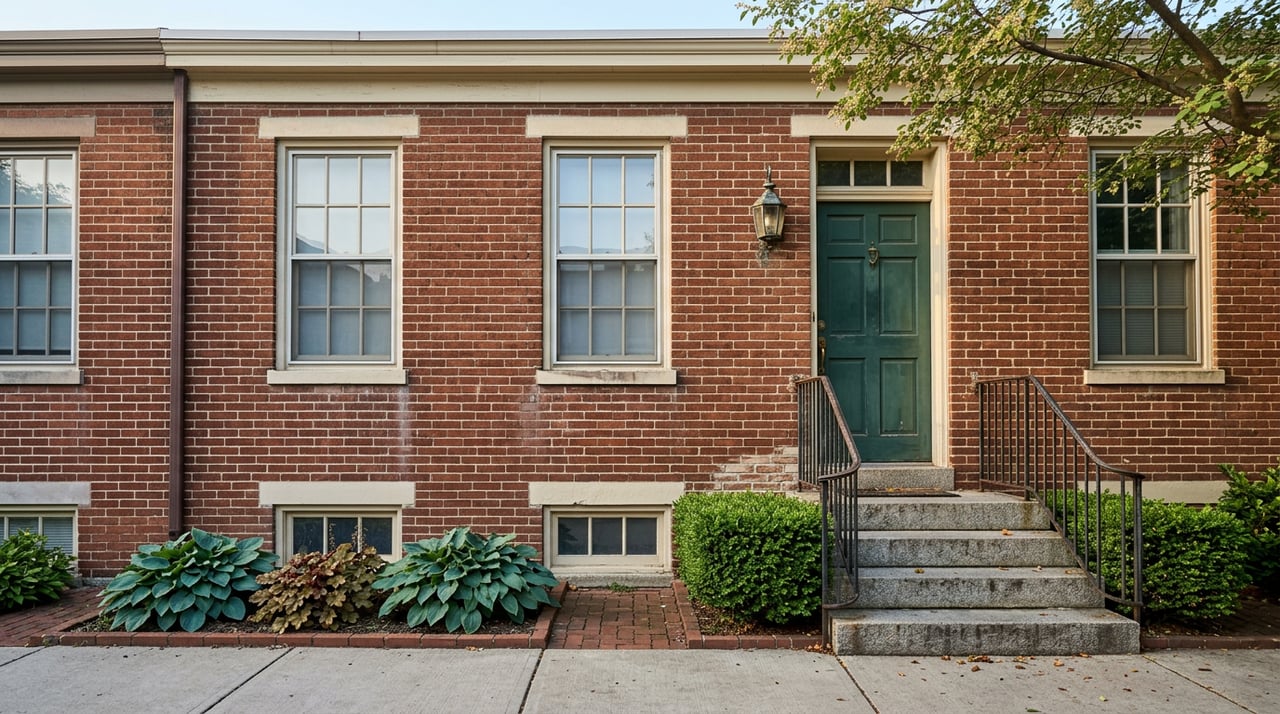
Most sellers assume the number of bedrooms in their listing comes from a walk through the house. Count the rooms with closets and a window, write down the number, done. In Middleton, that assumption is wrong in a way that can stall a closing.
The town's Board of Health does not let a septic system serve however many bedrooms happen to exist in a house. It ties the system's design flow to a specific bedroom count, and that count gets recorded as a restriction against the property. The house you are selling as a four-bedroom Colonial might be legally capped at three, and the only way to find out is to go looking for a document that has nothing to do with square footage.
The Document Nobody Reads Until It's a Problem
Middleton's Health Department keeps separate deed restriction forms for two, three, four, and five bedroom systems. Each one exists because Title 5, the state's septic code, sizes a system to a specific number of bedrooms and the wastewater flow that comes with them. When a system goes in, or gets upgraded, the town records which bedroom count it was designed and approved for. That number follows the property, not the current owner's intentions.
This is different from the general Title 5 inspection requirement most sellers have already heard about. The statewide rule says any home on a septic system needs a passing inspection within two years of a sale, or three years if it has been pumped annually with records to prove it. That inspection tells you whether the system is functioning. The deed restriction tells you what the system is legally rated to support, and those are two different questions.
A house can pass its Title 5 inspection with flying colors and still be capped at a bedroom count lower than what a buyer sees on the listing sheet, because someone finished a den or converted an attic into a fourth bedroom without ever touching the septic system that was designed for three.
Where This Actually Bites
Picture the sequence. A seller lists a home with four working bedrooms. A buyer's attorney or lender pulls the title. Somewhere in that chain is a recorded deed restriction limiting the property to a three-bedroom system. Now the listing description and the legal reality do not match, and someone has to sort it out before closing, usually under time pressure, usually with money on the line.
The septic system does not just need to work. It needs to be rated for the number of bedrooms the house is being sold as.
This is exactly the kind of friction that shows up hardest in trust and estate sales. A trustee or personal representative selling a parent's or relative's home is often working from decades-old paperwork, if they have the paperwork at all. Nobody living in the house today may know a deed restriction exists, because nobody living in the house today filed it. An addition built in the 1990s, a converted playroom, a finished third floor that quietly became a bedroom over the years, none of that shows up until a title search or a buyer's inspector starts asking specific questions.
What a Passing, Failing, or Conditional System Actually Costs
Once an inspection happens, the outcome falls into one of three categories, and each one changes the timeline and the negotiation differently.
| Inspection Result | What It Means | Typical Next Step |
|---|---|---|
| Pass | System functions and matches the recorded bedroom count | Sale proceeds on the normal timeline |
| Conditional pass | System has repairable issues | Repairs negotiated before or after closing |
| Fail | System does not meet current standards | Repair or replacement required, or terms renegotiated |
Repairs on a conditionally passing system tend to be a few thousand dollars. A full system replacement, especially on an older lot with soil constraints, runs meaningfully higher and can become a five-figure conversation. Buyers and sellers in Middleton have a few standard ways to handle a failed or conditional system without walking away from the deal: negotiating a price adjustment, setting up an escrow holdback so funds are reserved for the repair after closing, or agreeing on who arranges and pays for the work before title transfers.
None of that solves the deed restriction question, though. A system can be repaired to a perfect pass and still be capped at a bedroom count that does not match how the house is actually being used or marketed.
One Thing Middleton Sellers Do Not Need to Worry About
If you have read anything about Massachusetts tightening septic rules for nitrogen pollution, it is worth knowing that regulation does not touch Middleton. The state's 2023 nitrogen sensitive area rules, which require upgrades to nitrogen-reducing technology within five years, apply specifically to designated watersheds feeding coastal embayments and estuaries, mostly on Cape Cod and in southeastern Massachusetts. Middleton is an inland town on the Ipswich River, not a coastal watershed subject to that designation, so the five-year upgrade mandate that is reshaping Cape Cod real estate conversations is not part of the Middleton equation. What matters here is the older, more basic mechanism: bedroom count, design flow, and the deed restriction that connects them.
The Negotiation Point Most Buyers Never Raise
Because the market has been moving fast, this detail gets skipped more often than it should. Middleton's median sale price sat at $814,513 in May 2026, up 4.8% year over year, and homes were spending a median of 31 days on the market as of June 2026. That is not a market where buyers linger over paperwork. It is a market where offers get written quickly, sometimes before anyone has looked past the inspection report to the deed itself.
That pace works against buyers who are planning to finish an attic, convert a home office into a bedroom, or add a bunk room over the garage. If the septic system is rated for three bedrooms and the plan is to create a fourth, that plan runs straight into Middleton's Board of Health before it runs into a contractor. A buyer who assumes they can add a bedroom because the space exists physically may find out only after closing that the system itself sets the ceiling, and upgrading it to support the addition is a separate, often costly project.
This is where knowing the mechanism ahead of time changes the negotiation. A seller who pulls the deed restriction and shares it upfront is negotiating from a position of disclosure and control. A buyer who asks about it before writing an offer is negotiating with better information than most people at the table. Either way, it is a conversation worth having before signatures, not after.
The Annual List That Matters More Than People Realize
One more Middleton-specific detail worth knowing: the town publishes its own updated lists every year of licensed septic installers, licensed Title V inspectors, and licensed septage haulers. These lists change, and hiring someone off last year's version is not the same as confirming their license is current for 2026. For a seller trying to move quickly in a 31-day-median market, or a trustee coordinating an inspection from out of state, working from the current list on file with Middleton's Health Department saves a step that otherwise turns into a delay.
A Few Questions Worth Asking Directly
Does this apply if my home is connected to public sewer instead of a septic system? No. The bedroom-to-system deed restriction only exists because of how septic systems are sized. Homes on public sewer in Middleton are not subject to it.
What if I can't find a recorded deed restriction for my property? That does not necessarily mean one does not exist. Older systems may predate consistent recording practices. A title search or a call to Middleton's Health Department is the way to confirm what is actually on file.
Can I finish an unused room into a bedroom without touching the septic system? Only if the system's rated design flow already covers the additional bedroom. If it does not, the Board of Health treats the change in use as something that needs its own review before it happens, not after.
Is a system installed in the last five years exempt from a new inspection before sale? Generally, yes, if it was properly approved by the Board of Health at installation. That does not exempt it from the bedroom-count restriction tied to its original design.
If you are preparing to sell a Middleton home, especially one you inherited or are managing as a trustee, the deed restriction question is worth answering before the house ever hits the market. It is a five-minute records check that can prevent a five-week delay.
Jodi Fitzgerald has spent decades working through exactly this kind of paperwork trail for sellers, buyers, and the families managing trust and estate sales across Middleton and the surrounding towns. If you want to know what your deed actually says before a buyer's attorney finds out first, schedule a free consultation and get the straight answer early.